
Steve Irvine Q&A With Former UAB Coach Trent Dilfer
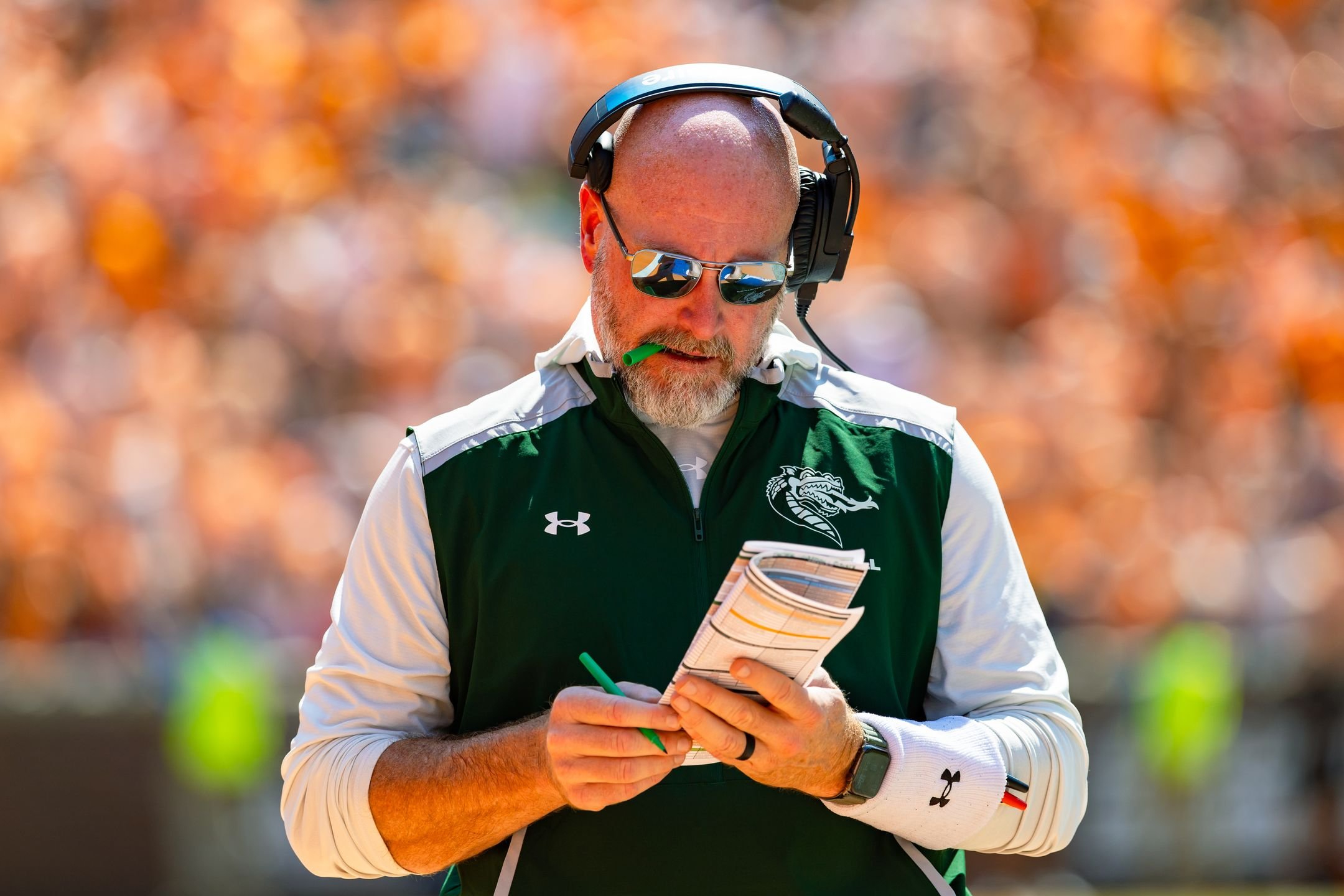
By Steve Irvine
BIRMINGHAM, ALABAMA - January 9, 2026
Trent Dilfer’s tenure as the UAB football head coach ended in early October. On Thursday, it was officially announced that Dilfer was headed back to start his second stint as the head coach at Lipscomb Academy in Nashville.
Dilfer was 44-10 with three state championship game appearances, closing his tenure out with back-to-back state titles, in his first term as the Lipscomb Academy head coach. He was 9-21 in 2 ½ seasons at UAB.
On Thursday, Dilfer talked about his decision to return to high school coaching and shared his thoughts on his short time in college coaching.
On how this happened: Honestly, I don't remember the timeline here. A few weeks to a month after I got fired, some very influential people in the Lipscomb community reached out to me. Would you be interested? At first I was like, well, no, I don't think so but I'll listen. It's a special place to us, so I'll listen. At the time, I was planning and visiting college football places, NFL places, like to keep coaching. As I went on these visits, it became increasingly more obvious to me that I did not want to be in college football. And these are people that I really respect, really think they are great at what they do, Clark Lea, Dabo Swinney, you know, like the best of the best. I'm like, they're awesome, but (college football) has become 100% transactional. I lived through that for 14 years (as an NFL player). I think the perspective sometimes gets lost. This is why I think you see Carson Palmer as the MaxPreps coach of the year, you see Tim Hasselback do this (coach in high school), you see Matt Hasselback volunteer for his brother to coach in high school. You see all these guys coaching high school football. It's because we lived what very few individuals live, which is professional football,100 percent transaction. You embrace it and you love it and win at all costs and let's go. That becomes our life. Then when we leave it, we're like I miss the transformational part. You talk to most NFL players, they will say the high school coach or somebody in their high school network was the most influential man in their life. Not their college coach, their high school coach.
When I went to Lipscomb the first time, I experienced that. I was like, oh my gosh, here's what it is like. I get to do high-level football. Now, I couldn't go coach high school (that is) roll out the footballs and play. You know what I mean? Like, I couldn't coach the PE version of high school football. But, you know, we were the 11th ranked team of the country. So, it's pretty high-level football. And you're shaping these families' lives. I mean, I had a dad text me a picture of him doing a (Mud run) or something like that. And he texts me a picture of them at the finish line. He says, I never would have done one of these unless you taught our family to do hard things. Like, that's a family thing. I get these moms of these SEC players text me all the time, like, (my son) is killing it because the coach said he's never had a player more prepared to play for him because of what he went through at Lipscomb. So this transformational piece, I got a taste of and I remember talking to you and I said, I'm going to do this at UAB. The problem was I did that with Amare Thomas. I did that with Kam Shanks. I did that with Chris Bracy. I did that with Everett Roussaw. I did that with Delano (Townsend). I mean, we recruited Delano off Instagram. That man's life has changed. Eamon Smalls walking through life with him. Xavier Daisy, where we leaned into the transformational piece and it worked. They played at a high level and then we lost them. Now you have to go to the portal, not saying anything bad about our portal players, but when you recruit the portal, you're recruiting years of scar tissue, years of dysfunction, years of not-transformational coaching, years of transactional experiences from these players. So what do you get? You get a transactional program that lost. I deserve to be fired. I told everybody I deserved to be fired.
When I started looking at this at Clemson and at Vanderbilt and talking to other people on the phone, (Jon) Sumrall was going through his coaching search, (Alex) Golesh and these other guys, my friends, Jeff Traylor and Eric Morris and Billy Napier and talking to all these guys it always came back to these transactions. I'm like, I can't do it. It's not for me. Again, because I lived it. This is their first experience of it. They're in the rat race. College football is a rat race. I've lived the rat race. That's a chapter of my life. So I don’t want the rat race. I want transformational coaching with the ability to play big-time ball. I think Lipscomb provides both. Our missions are aligned. It’s big-time high school football. Well, it's not right now. They're not very good again but we'll build it. We'll build it to be big-time high school football and now you get the best of both worlds. You know, you get to play for a trophy. You change lives. You get to go through all the hard things with them. And Nashville, as much as I love Birmingham, my family lives in Nashville. You got to see Decker running around. Now I'll see him running around in my backyard. It makes, in my world, perfect sense. It may not make perfect sense to the regular narratives and how people perceive it. Listen, I'm going to watch the (Miami-Ole Miss) game tonight and I’m fired up. I can't wait to watch the game. I'm still a college football fan. I just, at this stage of my life, with what is important to me, the transactional experience of college football is not for me.”
On when he felt that he was in a transactional situation: “Tommy Brigham said it the best. The best statement I heard after I got fired, from Tommy, was ‘Trent, you were so stuck in the frame, you couldn't see the picture.’ And I had an aha moment. I grinded every second of every day. I never slept well. I never stopped thinking about it. For just under three years, it was a relentless grind physically and mentally to try to find solutions to problems. I enjoyed it, I really did enjoy it. But when I got outside the frame and I could see the picture and going to Vanderbilt and Clemson and talking to these guys on the phone gave me that (discovery). The one thing I’ve always done, I've always done a pretty good job of reflection, where I just go to get quiet. We went to our house in Tahoe, I was able to get quiet. You know, it's snowing, you're looking at the lake, it’s peaceful. I was really able to step back and look at the picture. I said, you know what, college football, I love being a fan of it, but it's not what I'm designed for at this stage of my life. And that's fine. I'm okay with that. I was never trying to get to the College Football Hall of Fame. You know what I mean? That was never on the goal list.”
On some people using high school coach as a derogatory term: “I think there's a level of sophistication you have (in college football). Part of that (perception) is ignorance but part of it is true. (High school coaching) takes less X and O sophistication. It takes less recruiting. You don't recruit. Like people say you do but you don't recruit. You have in your school who comes to your school. You can't go watch a high school game and be like, oh, I like that player, I want him to come to my school. You just can't do that. So what college football coaches are very good at is recruiting and the Xs and Os. I would argue they're as good as NFL coaches in the Xs and Os, maybe more so because it's a little more creative than the NFL and you have to do more things with less talent. So I think people put their nose up to high school because of those two elements. But with the ignorance is that the transformational piece is way more challenging than the X and O and the recruiting piece.
The two things that were not hard for me in college football were recruiting and X and O. We did a heckuva job of recruiting high school players. Look at all of our guys playing in the Power Four. Then we have people over the country stealing our schemes on offense. So like those two things were not hard for me. I don't care what people say because I know the reality. I proved to myself that that was not that challenging. That's the easiest way to say it. I proved to myself that the Xs and Os and the recruiting were not these like impossible mountains to climb. Now, I was a colossal failure in terms of wins and losses. But I think everybody understands there's things outside of your control that lead to those things, too.”
On whether his UAB experience will change the way he coaches in his second term at Lipscomb: “It really will. One I learned some things from Clark and Dabo. They do some things, they have some commonalities that I took from both of them that I'll implement. I don't want to give the secrets away because I was in their buildings. They both do an incredible job with empowering coaches in certain areas. I want to do a better job with that. At times, it looks like I tried to be a one-man band and you can't do that. It's just not best for your people. I believe, I sense it in myself right now, that I'll be even more passionate in a good way, but have more self-control. You know, the (Kenneth) Gilstrap thing (at Tulane in 2023) still really bothers me. It's a regret that I have. And then I felt like after that, I overcorrected at times. Like I was scared to be myself because I didn't want to have outbursts. I think I'm more mature, maybe that's the easier way to say it. I'm a more mature coach without lacking passion.
There's some scheme things. There's some technical, from a technique, fundamental, and schematical standpoint that I (Alex Mortensen) or Reilly (Jeffers) or (Kevin) Garver or (Eddie) Gordon or somebody introduced me to, Hindley (Brigham), that I became an expert in during my time at UAB. I think that will be helpful. You know, we played really good defense in high school football (in my first term at Lipscomb) and really bad defense at UAB. I've done a lot of reflecting on defense, almost to the point where I feel like I could coach it. I'm so scarred by the bad defense that we played for three years that I really took (a look at it). One of the projects I did when I first got fired was I studied every offensive snap of Indiana, North Texas, and Oregon. Three of the best offenses in college football. I took the games they struggled and looked at the commonality of defense. That was probably the most revelatory thing that I found. And so I really, really feel like I know what I want defensively because you're going to win championships by playing great defense, running the football and being great on special teams. That is never going to get old. That's been really good, I think I'll be a much better coach that way.
Honestly, my best memories of UAB are my best memories of Lipscomb, (which is) affirmation of relationships. Like Jaylyn Ferguson, Baron Franks, (Iverson) Hooks), Delano after he left, Shanks after he left, Bracy, Daisy, Jalen Kitna, JD Morgan. There's more, too. You know, the relationships that I have with those guys are probably forever relationships. So that relational investment and that relational equity, I think, is affirmation that I'm going to double down on that. Like, I really want to help these players reach their best on and off the field, to me, that's the most rewarding thing. Like, I got a text from Aron Marsch last night. He wants me to write a letter of recommendation for him. I'm one of two people that he wants me to write a letter of recommendation for him. He never helped us in a game, but he's a forever relationship. You know, like, Cam Jennings texting me. Jaylyn Ferguson’s text was like a book about what I mean to him. Jonah Delange, coming home from the Charlotte game on the plane, his parents still tear up when they talk to me. Jonah will be a forever relationship. There's a lot of forever relationships in that UAB tribe, much like we have the Lipscomb tribe. My funeral one day, nobody's going to talk about wins and losses. Not one person will stand up there and talk about, remember the game in 2000 or remember the game in 96 or remember the game in 2021? Nobody's going to say those things. They're going to talk about the impact. I want to double down on the impact of these young people's lives.”
On taking different things from a successful term at Lipscomb and unsuccessful stop at UAB: “I think it leads to reflection. This is something I told the high school kids today when I met with them on Zoom. I said, ‘Listen, what I'm about to say, I'm telling myself, too. I'm not just telling you 69 players in the room. I'm also telling Trent Dilfer the coach.’ Winning is earned and learned. You don’t just win because you won in the post. I’m proof of that. There's a lot of people that are proof of that, right? Winning is earned and learned and it happens every single day. I have to relearn how to win. I have to earn the right to win again as a coach. I just lost for three years. Like, that's who I am right now. Like, the old line Bill Parcells said ‘You are what the scoreboard says you are.’ That’s right, as a team. So right now as a coach, I'm a loser coach. I have to relearn and earn how to win again. I want the players to hear me say that. Like, I'm going to earn it. I'm going to earn it by who I hire. I'm going to earn it by how I work. I'm going to earn it by how we schedule. I'm going to earn it by how we build up processes. I'm going to earn it by being a smarter coach. You know, and then I’m going to learn things about these players and how to win with this group. They have to learn it and earn it too because they've lost for two years now as well.”
On whether he has started offseason work: “No. I knew I was going to do this, I don't know, two weeks ago. We had kind of made the decision this is where we were going to go. There were some hoops that I had to jump through. I started planning some processes and stuff. I've watched some film. I got a lot of work ahead of me. We'll be a little bit behind here. I'll have to find a way to catch up, so this will be a challenge. Frankly, they weren't very successful. I don't want to say they weren't good. They had some good players, but they weren't very successful. So, you know, we’ve got to teach this group how to learn how to win and they got to go earn it. That's going to be a challenge now.”